Taking a Cat from the UK to New Zealand: The Complete 2026 Guide
Last updated: 27 September 2026
If you’re planning to take your cat from Great Britain to New Zealand, the process needs to start well before you book flights. New Zealand has no rabies in its animal population, and its import rules are designed to protect that status. A cat can only travel once the required sequence of vaccination, testing, identification checks, permits and certification has been completed, and several stages carry fixed waiting periods that can’t be shortened.
The London Travel Vet prepares export health certificates for pets travelling internationally, including cats moving to New Zealand, and this guide sets out what’s involved, based on the current requirements from New Zealand’s Ministry for Primary Industries (MPI) and the UK’s own export process, run by the Animal and Plant Health Agency (APHA).
New Zealand also revised its Import Health Standard for cats and dogs this year. If you want the detail on exactly what changed, our guide to the 2026 IHS changes covers that. This guide is about getting your own dog from Great Britain to New Zealand, start to finish.
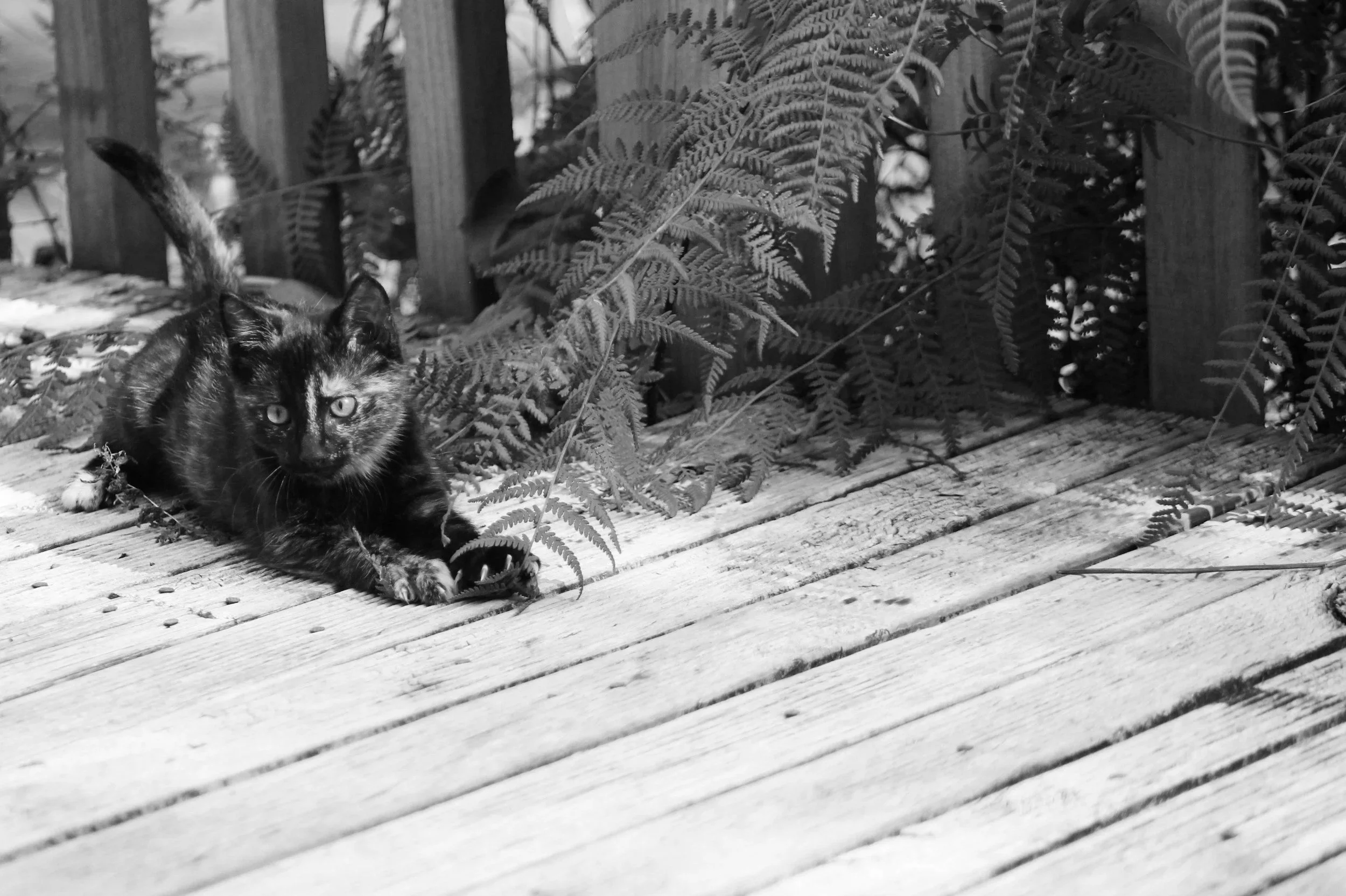
The essentials
Category: Great Britain is a Category 3 country under MPI’s rules, meaning rabies is absent or well controlled. A rabies vaccination and blood test are required.
Practical minimum age: a cat will generally be more than nine months old at the date of shipment because of the rabies vaccination and RNATT timing.
The 2026 IHS: came into force on 1 July 2026, with a transition period allowing the 2021 requirements to remain acceptable until 1 April 2027.
New identification check: required for cats being prepared under the 2026 process, with the timing linked to the RNATT sample.
Import permit: required from MPI, separately from the UK export certificate.
Quarantine: minimum 10 days at an MPI-approved facility on arrival.
Flights: cats arriving by air must travel as manifested cargo, unless they are a genuine assistance animal and the airline permits cabin travel. Air arrivals can enter through Auckland or Christchurch.
UK certificate: EHC 2593, currently version 6, applied for through APHA.
Bengal cats: eligible with documented proof of five generations of domestic ancestry.
Can my cat go?
Most domestic cats can be prepared for this route, but there are a few eligibility points to check before you plan around a departure date.
A cat crossed with a wild species is treated as a hybrid and is not ordinarily eligible for import. Bengal cats are the specific exception. They can be imported provided documentation showing five generations of domestic ancestry is supplied. If you own a Bengal, raise this with your Official Veterinarian early, as gathering the necessary documentation can take time. Other hybrid cats may require approval from New Zealand’s Environmental Protection Authority before they can be imported. (Ministry for Primary Industries)
A cat can’t be more than 42 days pregnant on the date of shipment.
The current UK certificate requires your vet to confirm the cat will be more than nine months old at shipment. The 2026 MPI requirements do not simply state a nine-month minimum in the same way, but the rabies vaccination and RNATT sequence means a cat starting the process from scratch will generally be at least nine months old before it can travel.
When do I need to start?
MPI’s revised Import Health Standard for cats and dogs came into force on 1 July 2026. There is a nine-month transition period during which an export can be prepared under either the outgoing 2021 requirements or the new 2026 requirements. From 1 April 2027, all cats and dogs entering New Zealand must meet the 2026 requirements. (Ministry for Primary Industries)
The new identification checks begin from 1 October 2026. If your cat is being prepared under the 2026 process, the relevant identification check needs to be completed at the required point before shipment.
The two standards should not be confused. The timing of the rabies blood test, parasite treatments and certification differs between the 2021 and 2026 processes, so establish which standard your cat’s export is being prepared under before starting the veterinary sequence.
If you’re unsure, ask us or check directly with MPI rather than relying on paperwork from a previous trip.
Rabies vaccination and RNATT
For a cat travelling from a Category 3 country such as Great Britain, rabies vaccination and an RNATT (rabies neutralising antibody titration test) are required under the 2026 process.
The rabies vaccination must be given by a veterinarian when the cat is at least 12 weeks old, using an approved vaccine. If it is a primary vaccination, it must have been given at least six months before shipment. If it is a booster, it must remain continuously valid through to shipment.
Your cat then needs an RNATT, with a result of at least 0.5 IU/mL. Under the 2026 IHS, the blood sample must be taken not less than three months and not more than 12 months before shipment. MPI recommends waiting three to four weeks after rabies vaccination before taking the sample to allow an immune response to develop, although this may not be necessary where there is an established vaccination history.
The 2026 identification requirement
If your cat is being prepared under the 2026 process, an Official Veterinarian must carry out a pre-export identification check linked to the RNATT sample. This is separate from the routine microchip checks carried out during the rest of the veterinary process.
For a cat from a Category 3 country:
If the RNATT sample is taken 6 to 12 months before shipment, the microchip must be scanned by an Official Veterinarian before the RNATT sample is taken.
If the RNATT sample is taken at least 3 months and less than 6 months before shipment, two scans are required. The first must take place at least six months before shipment and the second before the RNATT sample is taken.
The competent authority in the exporting country must communicate directly to MPI that the identification check has been completed. The RNATT sample can be taken on the same day as the relevant microchip scan.
If your cat is being prepared under the 2021 process during the transition period, these 2026 identification requirements do not apply.
The other veterinary requirements
Cats have a shorter list of pre-export requirements than dogs.
Internal parasites. Your cat needs two treatments against nematodes and cestodes, including Echinococcus species. The first must be given within 30 days of shipment and at least 14 days before the second. Under the 2026 IHS, the second treatment must be given within five days of shipment.
External parasites. Under the 2026 IHS, cats require one treatment against fleas and ticks. It must be given within 16 days of shipment using a product listed by MPI, with continuous protection maintained through to travel. The cat must be free from visible external parasites at the time of treatment and at the final pre-export examination.
The current UK EHC 2593 still asks for two external parasite treatments, with the second within two days of shipment. This is another difference between the wording of the current UK certificate and the 2026 MPI requirements, and should be addressed by your Official Veterinarian when preparing an export under the 2026 process.
Respiratory disease declaration. For at least 21 days before shipment, your cat must not have been kept in a place where cats or dogs were showing clinical signs of infectious respiratory disease, and must not have shown clinical signs of infectious respiratory disease itself. This is a written declaration rather than a diagnostic test.
Final examination. In the two days before shipment, an Official Veterinarian examines your cat and confirms that they are healthy and fit to travel, free from visible external parasites and free from clinical signs of infectious disease.
If your cat has an ongoing health issue or takes regular medication, mention this to your vet well before the final examination. There is more scope to deal with a complication when you know about it in advance.
Quarantine and the New Zealand import permit
Quarantine is mandatory for cats arriving from Great Britain. Your cat is transported directly from the airport to the MPI-approved quarantine facility named on the import permit, rather than being released to you at the airport. The minimum quarantine period is 10 days.
An MPI veterinarian inspects your cat within 72 hours of arrival at the quarantine facility and again once the 10-day period has been completed. The stay can be longer if the quarantine period ends outside normal business hours, an import requirement has not been met, your cat becomes unwell, external parasites are found, or your cat cannot be adequately examined.
You need to book an MPI-approved quarantine facility before applying for the import permit, as the booking confirmation forms part of the permit application. Space is limited, so this should be arranged well in advance.
The import permit is MPI’s authorisation for your specific cat and is separate from the UK export certificate. Applications are made online. MPI recommends applying at least six weeks before travel and requires at least 30 working days to process a complete application.
The import permit and the UK export certificate serve different purposes. You need both.
The UK Export Health Certificate
The certificate currently used for cats travelling from Great Britain to New Zealand is EHC 2593. It is applied for through APHA’s online export health certificate service. Northern Ireland follows a separate DAERA process. (GOV.UK)
EHC 2593 is completed in sections by an Official Veterinarian, with the final examination and certification taking place shortly before shipment. The current certificate is valid for 10 days and requires the microchip number to appear consistently across the supporting records and certification.
An important 2026 update
New Zealand introduced a revised Import Health Standard for cats and dogs on 1 July 2026. There is a nine-month transition period during which exports can be prepared under either the 2021 or 2026 requirements. From 1 April 2027, all dogs entering New Zealand must meet the 2026 requirements. (Ministry for Primary Industries)
At the time of writing, the current UK EHC 2593 does not fully align with the requirements of the 2026 MPI Import Health Standard. This creates some uncertainty for Official Veterinarians and owners preparing exports during the transition period.
We are in contact with APHA to seek clarification on how the current UK export certificate should be applied alongside the new 2026 MPI requirements. We will update this guide as further information becomes available.
If you are planning to take your cat to New Zealand, please keep checking back with The London Travel Vet and APHA for updates, and always check the “Last updated” date at the top of this article to make sure you are working from the most current information available.
Flying to New Zealand
Cats arriving in New Zealand by air must travel as manifested cargo. The exception is a genuine assistance animal where the airline permits cabin travel. Transport arrangements must meet the relevant IATA Live Animals Regulations.
Meeting MPI’s requirements does not mean an airline will automatically accept your cat. Not every carrier transports live animals on this route, and your route may involve transit through another country with its own requirements. Check the airline’s live-animal policy and the complete routing before booking.
Your cat’s transport container must meet the applicable IATA requirements and be clean, dry and free from pests. The Official Veterinarian checks the container as part of the export certification process.
Cats arriving by air can enter New Zealand through Auckland or Christchurch airports only.
What happens when your cat arrives?
Your cat is transferred directly from the airport to the quarantine facility named on the import permit. They are not released to you at the airport.
An MPI veterinarian inspects your cat within 72 hours of arrival at the facility and again after the minimum 10-day quarantine period. Your cat is released once MPI is satisfied that the import requirements have been met and the final inspection has been completed.
If fleas or ticks are found, or if there is a problem with the paperwork or another import requirement, further treatment, inspection or quarantine may be required. This can add both time and cost to the journey.
Costs
The total cost varies between individual cats and providers, so a single figure can be misleading.
The main components are veterinary appointments and vaccination, the RNATT, parasite treatments, MPI’s import permit and inspection fees, quarantine fees, airline or cargo charges, the travel crate, a pet transport company’s fees if you use one, and the export certificate itself.
MPI publishes its own fees for permits and inspections, while quarantine facilities set their own charges. Check current figures before budgeting rather than relying on an older estimate.
The costs that catch people out tend to be the avoidable ones: a quarantine stay that runs beyond the minimum, a treatment that has to be repeated, or a document or test that needs to be redone because it was completed under the wrong timing window.
A Practical Timeline
At the outset: confirm your cat is eligible and establish whether the 2021 or 2026 process is being used.
Six months or more before travel: rabies vaccination, if not already valid, and the pre-export identification-check sequence if the 2026 process applies.
Three to 12 months before shipment: the RNATT sample must fall within the 2026 IHS window. The exact timing affects how the identification checks are arranged.
Once the veterinary timeline is established: book an MPI-approved quarantine facility and prepare the import permit application.
In the weeks before departure: complete the internal parasite treatments and the 2026 external parasite treatment at the required intervals.
In the final two days: final veterinary examination and completion of the final export certification requirements.
On arrival: direct transfer to quarantine and a minimum 10-day stay.
Common Mistakes
Booking flights before the veterinary timeline is established.
Mixing timing windows or requirements from the 2021 and 2026 standards.
Assuming an existing RNATT result is automatically valid under the 2026 process.
Overlooking the Bengal cat documentation requirement until late in the process.
Missing the new pre-export identification check.
A microchip number that doesn’t match across the vaccination record, laboratory report and certificate.
Leaving quarantine booking or the import permit application until close to departure.
Assuming the current UK certificate wording automatically reflects every requirement in the 2026 MPI standard.
Assuming an airline’s own policy matches MPI’s rules, rather than checking both.
Frequently Asked Questions
Can I take my cat from the UK to New Zealand?
Yes, provided your cat meets New Zealand’s eligibility requirements and the relevant vaccination, testing, identification, permit and certification requirements are completed correctly.
How old does my cat need to be?
The current UK certificate requires your cat to be more than nine months old at shipment. The 2026 MPI rabies requirements also mean that a cat starting the process from scratch will generally be at least nine months old before it can travel.
Can I take a Bengal cat?
Yes. Bengal cats are specifically permitted, provided documentation showing five generations of domestic ancestry is supplied. Other hybrid cats may require approval from New Zealand’s Environmental Protection Authority.
Does my cat need an RNATT?
Yes, under the 2026 MPI standard, the blood sample must be taken not less than three months and not more than 12 months before shipment, with a result of at least 0.5 IU/mL.
Does my cat need the new identification check?
If your export is being prepared under the 2026 process, yes. The timing depends on when the RNATT sample is taken.
Does my cat need quarantine?
Yes. Cats arriving from Great Britain must spend a minimum of 10 days at an MPI-approved quarantine facility. The stay can be longer if there is a problem with the import requirements, your cat becomes unwell, external parasites are found or the final inspection cannot take place as scheduled.
Does my cat need an import permit?
Yes. The permit is issued by MPI and is separate from the UK export health certificate. You need to book the quarantine facility before applying for the permit.
Can my cat fly in the cabin?
No, not as an ordinary pet. Cats arriving by air must travel as manifested cargo. The exception is a genuine assistance animal where the airline permits cabin travel.
Which airports can my cat arrive at?
Cats arriving by air can enter New Zealand through Auckland or Christchurch airports.
What happens when my cat arrives?
Your cat is transferred directly from the airport to the approved quarantine facility named on the import permit. An MPI veterinarian inspects them within 72 hours of arrival and again after the minimum 10-day quarantine period.
The London Travel Vet
The requirements above apply broadly to cats travelling this route, but where your cat sits within them, whether an existing RNATT result is usable, which standard applies and how the timing works against a particular departure date depend on their individual history.
If you’re planning to take your cat from the UK to New Zealand, The London Travel Vet can help you work through the veterinary requirements, establish a realistic timeline and prepare the relevant export documentation.
Book an appointment with The London Travel Vet →
Not sure where to start? Get in touch and tell us about your move.